
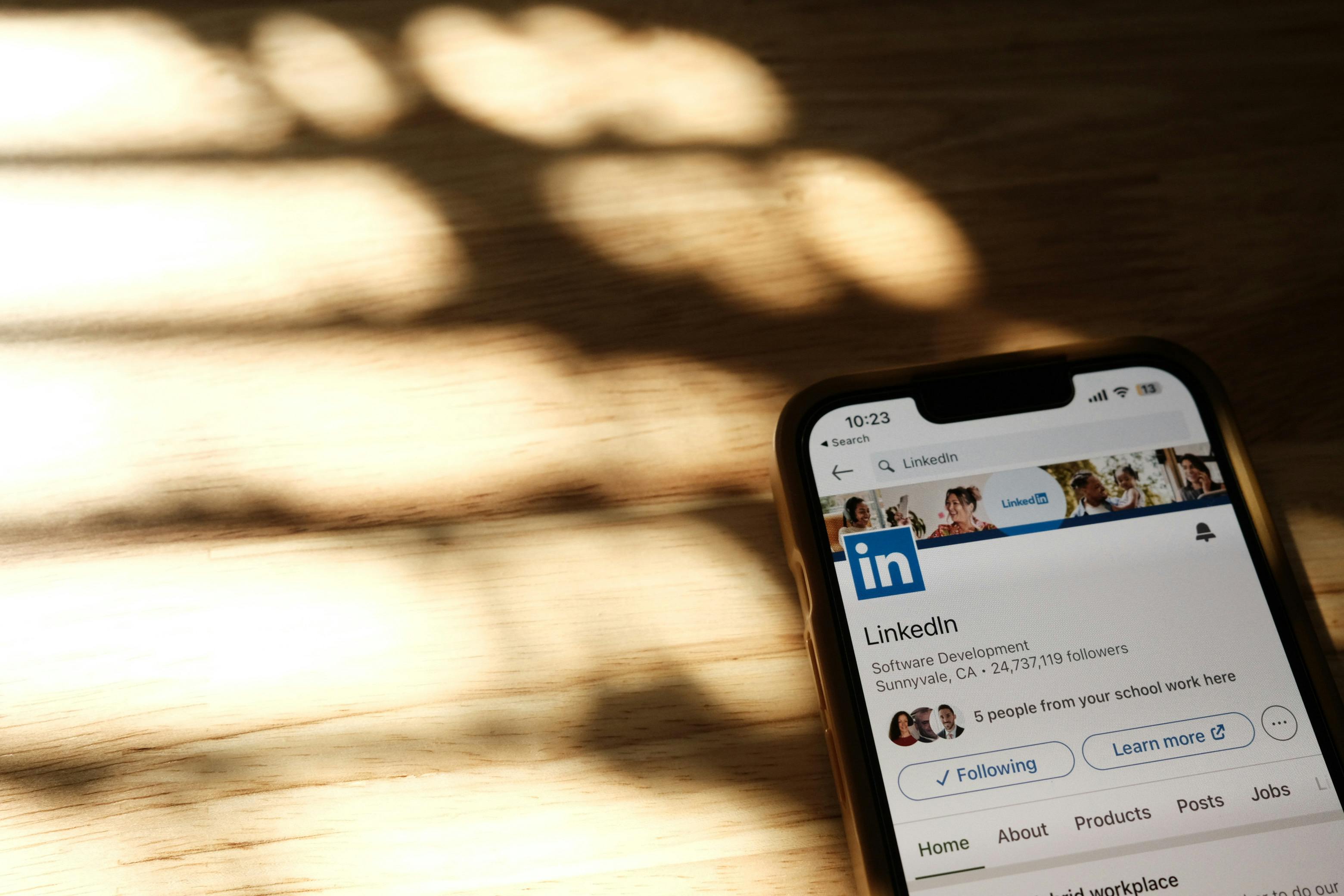
LinkedIn didn't issue a press release about this. But anyone managing company pages noticed. Reach dropped. Engagement fell. Posts that used to generate meaningful conversation started disappearing into the void.
At the same time, individual posts from the same companies were performing better than ever. Same content. Same topics. Different source. Completely different results.
This wasn't random. LinkedIn made a deliberate choice to prioritize individual voices over institutional ones. And once you understand why, it makes perfect sense.
LinkedIn's business model depends on keeping people on the platform. The longer users scroll, the more ads they see, the more valuable the platform becomes.
Company pages don't create that behavior. People don't scroll through corporate content. They skim it, ignore it, or scroll past it. It's background noise.
Individual voices create engagement. People stop scrolling. They read. They comment. They share. They have actual conversations. That's what keeps them on the platform.
So LinkedIn optimized for what works. They pushed individual content higher in the feed and let company content fade. It's not personal. It's performance.
I've seen this across dozens of clients. A company page posts an update about a new product launch. Reach: 400 people. Engagement: maybe 10 likes.
The CEO posts the same announcement in their own voice, with their own perspective on why it matters. Reach: 15,000 people. Engagement: 200+ reactions, 40 comments, meaningful conversation.
Same company. Same news. Different messenger. Ten times the impact.
And this pattern holds across industries, company sizes, and content types. Individual voices consistently outperform institutional ones by a factor of 10-20x.
For years, B2B companies built LinkedIn strategy around their company page. Post regular updates. Build followers. Drive traffic back to the website.
That playbook is dead. Company pages still have a role—they're proof of legitimacy, a place to list jobs, a hub for information. But they're not where visibility happens anymore.
If you want to reach your audience on LinkedIn now, you need individual voices. Executives. Subject matter experts. People who can speak with authority and authenticity.
This isn't a workaround. It's how the platform is designed to function.
LinkedIn's algorithm shift isn't arbitrary. It's reflecting a broader trust dynamic that's been building for years.
People don't trust companies the way they used to. Corporate messaging feels filtered, managed, constructed. Even when it's true, it feels promotional.
But they still trust individuals. When an executive shares a perspective, it feels more real. When an expert explains something in their own words, it carries weight that the company page version never could.
LinkedIn's algorithm is amplifying what was already true. Individual credibility beats institutional credibility. Always has. Now the platform architecture reflects it.
If your leadership team isn't active on LinkedIn, you're essentially invisible on the platform that matters most for B2B.
Your company page exists. But nobody sees it. Your content gets published. But nobody engages with it. Your brand is technically present. But practically absent.
Meanwhile, competitors with visible executives are dominating the conversation. Not because they're spending more on marketing. Because they've adapted to how the platform actually works now.
This creates a compounding disadvantage. The longer you wait, the further behind you fall. Because visibility builds on itself. The executives who've been posting consistently for the past year have built audiences that make every new post more impactful.
This shift hits recruitment especially hard. Candidates research companies on LinkedIn before applying. They look at the company page, but they also look for the people who work there.
If they find a company page with minimal engagement and no visible leadership, what conclusion do they draw? Either the company isn't active on LinkedIn (which suggests they're behind on professional visibility), or the leadership doesn't engage publicly (which raises questions about transparency and culture).
If they find executives who are regularly sharing insights, engaging in conversation, and demonstrating thought leadership, they see a company worth considering. The individual visibility creates institutional credibility.
The organisations responding well to this shift aren't trying to game LinkedIn's algorithm. They're building the infrastructure that makes individual visibility sustainable.
They're training executives on what makes effective LinkedIn content. They're creating systems for capturing insights and turning them into posts. They're establishing clear guidelines about what can be shared and what needs review. They're making it as easy as possible for leaders to be consistently visible.
And they're seeing the results. Better talent attraction. Stronger stakeholder engagement. More inbound opportunities. All driven by individual visibility on a platform that's now built to reward exactly that.
Some companies are still trying to make company pages work. Investing in content. Paying for promoted posts. Hoping that more effort will overcome the algorithm.
It won't. The algorithm isn't broken. It's working exactly as intended. Individual voices get priority. Company pages don't.
Continuing to invest primarily in company page content while your executives stay silent is like optimizing for yesterday's platform. You're working hard on something that fundamentally doesn't work anymore.
When companies make this shift—from treating the company page as the primary channel to treating executives as the primary channel—the entire dynamic changes.
Content becomes more authentic because it's coming from real people. Engagement increases because the algorithm rewards individual posts. Reach expands because networks compound (ten executives each with 5,000 connections reach 50,000 people, not the 5,000 who follow your company page).
And the business impact follows. The companies with the most visible executives are the ones candidates want to work for, partners want to collaborate with, and customers want to engage with.
Most companies haven't adapted yet. Most leadership teams are still quiet on LinkedIn. Most organisations are still treating their company page as their primary presence.
Which means the companies that move now will have a visibility advantage that's difficult to close. Because LinkedIn's algorithm rewards consistency over time. The executives who start building presence today will have audiences six months from now that new entrants can't match quickly.
But that window won't stay open forever. As more organisations recognize how LinkedIn works now, visibility will shift from advantage to expectation. The question is whether you adapt while there's still a competitive benefit to being early.
The path forward isn't complicated. It just requires intention.
Start with your most strategic executives. Who has the credibility, the perspective, and the willingness to be visible? Focus there first.
Build the support infrastructure. Don't expect executives to figure out LinkedIn on their own. Give them the systems, the content support, the guidelines that make visibility sustainable.
Measure what matters. Track whether executive visibility is affecting talent attraction, stakeholder engagement, and business development. If it's not moving those outcomes, adjust the approach.
And commit to consistency. LinkedIn rewards regular presence, not sporadic posting. The executives who show up weekly will outperform those who post monthly, even if the monthly content is better.
LinkedIn isn't going back to prioritizing company pages. The algorithm shift is permanent. Individual voices will continue to outperform institutional ones.
Companies that adapt will build visibility, credibility, and business impact. Companies that don't will become increasingly invisible on the platform that matters most for B2B.
The choice isn't whether to adapt. It's whether to adapt while there's still an advantage to being early.
.png)